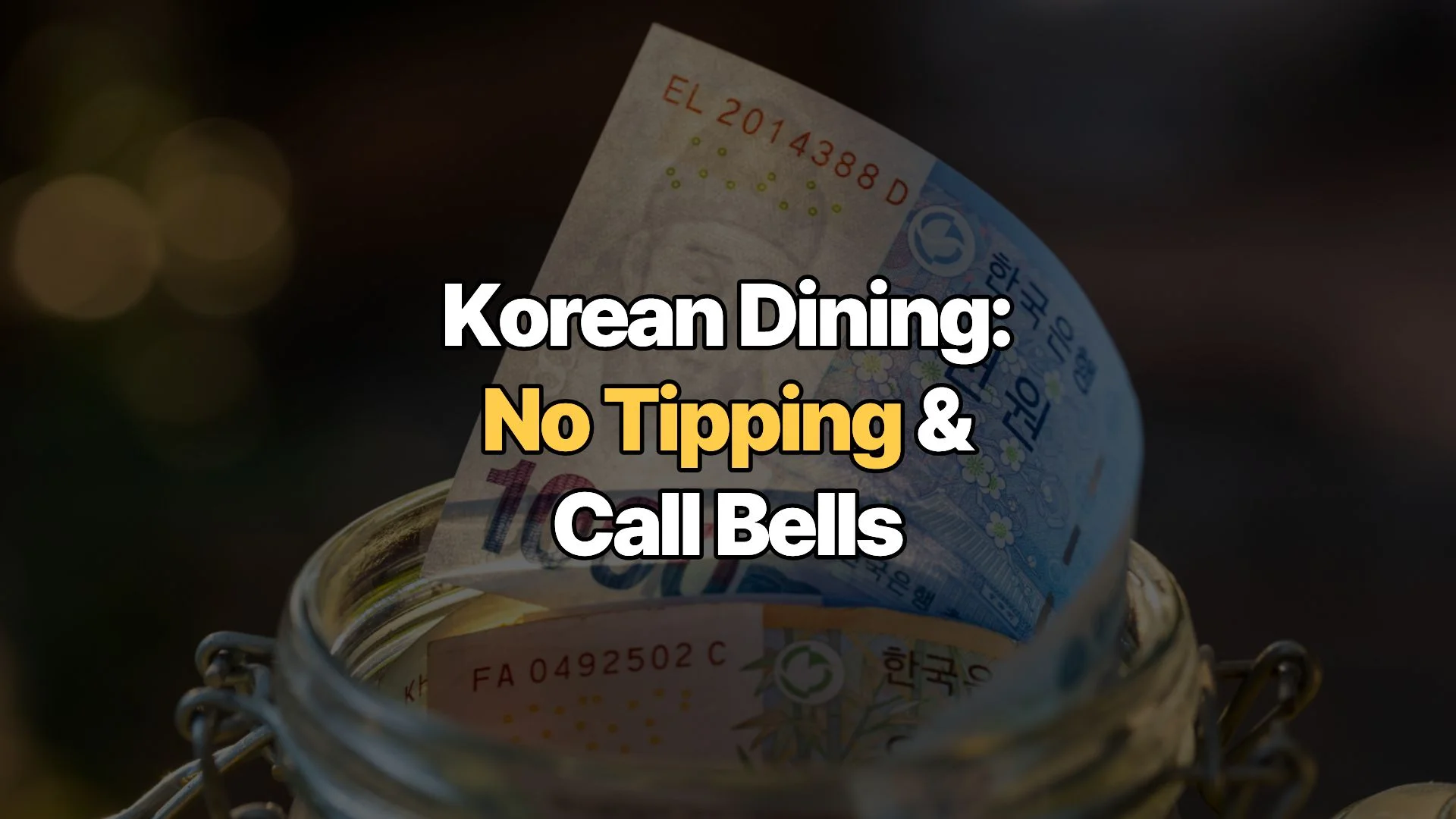
한국을 방문하는 여행객들이 가장 크게 안도감을 느끼면서도 동시에 낯설어하는 부분은 바로 결제 시스템입니다. 북미나 일부 유럽 국가와 달리, 대한민국에는 팁(Tipping) 문화가 전혀 존재하지 않습니다. 메뉴판에 적힌 가격은 세금과 서비스 요금이 모두 포함된 최종 금액입니다.
Travelers visiting South Korea often experience a profound sense of relief mixed with initial confusion regarding the payment system. Unlike in North America or certain European countries, there is absolutely no tipping culture in South Korea. The price written on the menu is the final amount you pay, inclusive of all taxes and service charges.
식당, 카페, 바(Bar)는 물론이고 택시, 호텔 서비스, 미용실에 이르기까지 한국의 모든 상업 시설에서는 팁을 요구하지도, 기대하지도 않습니다. 이러한 문화적 배경에는 서비스업 종사자의 임금 구조와 ‘서비스는 상품 가격에 포함되어 있다’는 한국 사회의 전반적인 인식이 자리 잡고 있습니다.
From restaurants, cafes, and bars to taxis, hotel services, and hair salons, no commercial establishment in Korea demands or expects a tip. This cultural norm is rooted in the wage structure of service industry workers and the general societal perception that “service is inherently included in the price of the product.”
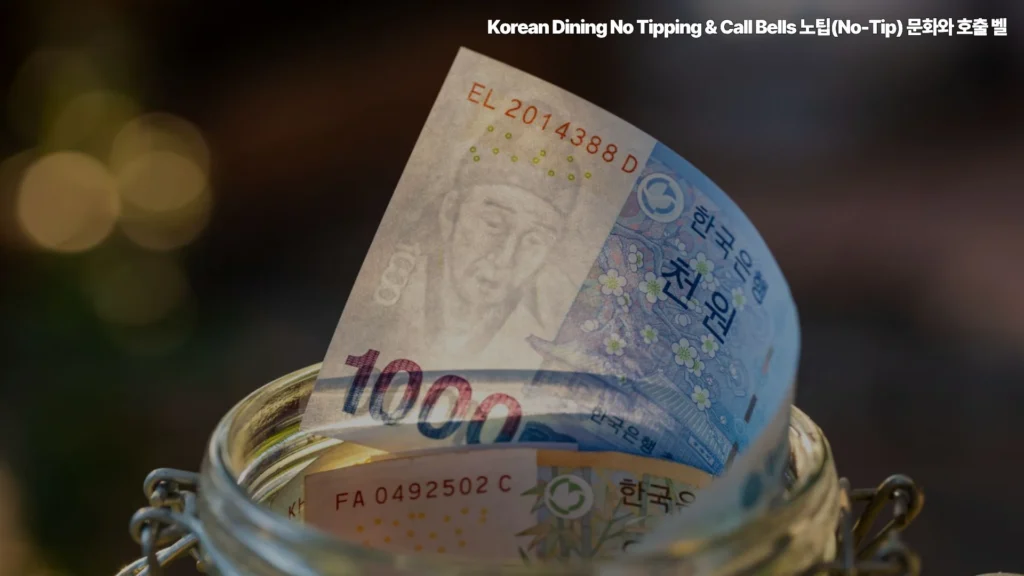
만약 훌륭한 서비스에 감동하여 테이블 위에 현금을 남겨두고 식당을 나선다면, 직원이 당신이 돈을 잊고 간 줄 알고 급히 밖으로 쫓아 나와 돈을 돌려주는 당황스러운 상황을 겪게 될 확률이 높습니다.
If you are deeply moved by excellent service and decide to leave cash on the table before exiting the restaurant, there is a very high probability that a staff member will run out of the restaurant chasing after you, thinking you accidentally left your change behind.
1. 팁 대신 감사를 전하는 방법 (How to Express Gratitude Instead of Tipping)
금전적인 보상으로 감사를 표현하는 문화에 익숙한 외국인들에게는 훌륭한 서비스를 받고도 아무것도 주지 않는 것이 예의에 어긋난다고 느껴질 수 있습니다. 하지만 한국에서는 팁 대신 건네는 진심 어린 인사와 태도가 훨씬 더 가치 있고 자연스러운 예의로 받아들여집니다.
For foreigners accustomed to expressing gratitude through financial rewards, walking away after receiving excellent service without leaving anything might feel impolite. However, in Korea, sincere greetings and a respectful attitude are considered far more valuable and natural forms of courtesy than a tip.
계산을 마치고 식당을 나설 때, 직원과 눈을 맞추며 한국어로 “감사합니다(Gam-sa-ham-ni-da)” 또는 “잘 먹었습니다(Jal meok-eot-seum-ni-da / I ate well)”라고 말하는 것만으로도 충분합니다. 약간의 목례(고개를 가볍게 숙이는 인사)를 곁들인다면 한국의 예절에 완벽하게 부합하는 행동이 됩니다.
When you finish paying and leave the restaurant, simply making eye contact with the staff and saying “감사합니다” (Gam-sa-ham-ni-da – Thank you) or “잘 먹었습니다” (Jal meok-eot-seum-ni-da – I ate well / The meal was great) in Korean is more than enough. Adding a slight bow of the head will perfectly align your actions with Korean etiquette.
택시를 이용할 때도 마찬가지입니다. 목적지에 도착하여 요금을 지불한 뒤, “수고하세요(Su-go-ha-se-yo / Keep up the good work)” 또는 “감사합니다”라고 인사하며 하차하는 것이 한국인들의 일상적인 방식입니다. 간혹 현금으로 결제한 후 잔돈(Coins)을 받지 않고 기사님께 드리는 경우는 있지만, 이 역시 의무적인 팁이라기보다는 소액의 잔돈을 챙기는 번거로움을 피하기 위한 편의적인 행동에 가깝습니다.
The same rule applies when using a taxi. After arriving at your destination and paying the fare, it is the everyday Korean way to exit the vehicle while saying “수고하세요” (Su-go-ha-se-yo – Keep up the good work) or simply “감사합니다.” Occasionally, if a passenger pays with cash, they might tell the driver to keep the small coin change. However, this is not an obligatory tip, but rather a matter of convenience to avoid carrying small, heavy coins.
2. 식탁 위의 마법 버튼: ‘호출 벨’ 문화 (The Magic Button on the Table: The ‘Call Bell’ Culture)
한국의 식당 문화를 경험할 때 노팁 문화만큼이나 외국인들에게 혁신적으로 다가오는 것이 바로 식탁마다 설치된 ‘호출 벨(Call Bell)’입니다. 서구권 식당에서는 담당 서버와 눈을 맞추거나 그들이 테이블로 다가올 때까지 인내심을 가지고 기다려야 합니다. 손을 들거나 소리 내어 직원을 부르는 것은 무례한 행동으로 간주되기 때문입니다.
When experiencing Korean restaurant culture, something just as revolutionary to foreigners as the no-tipping culture is the ‘Call Bell’ installed on almost every table. In Western restaurants, you must make eye contact with your designated server or wait patiently until they approach your table. Raising your hand or calling out verbally to a waiter is often considered rude.
하지만 한국의 식당, 특히 고깃집, 찌개 전문점, 주점 등에서는 직원의 주의를 끌기 위해 기다릴 필요가 없습니다. 빠르고 효율적인 것을 중요하게 생각하는 한국의 ‘빨리빨리(Pali-pali)’ 문화는 호출 벨이라는 시스템을 정착시켰습니다.
However, in Korean restaurants—especially BBQ joints, stew specialty shops, and pubs—there is no need to wait to catch a staff member’s attention. Korea’s ‘Pali-pali’ (hurry up / fast-paced) culture, which heavily prioritizes speed and efficiency, has deeply established the call bell system.
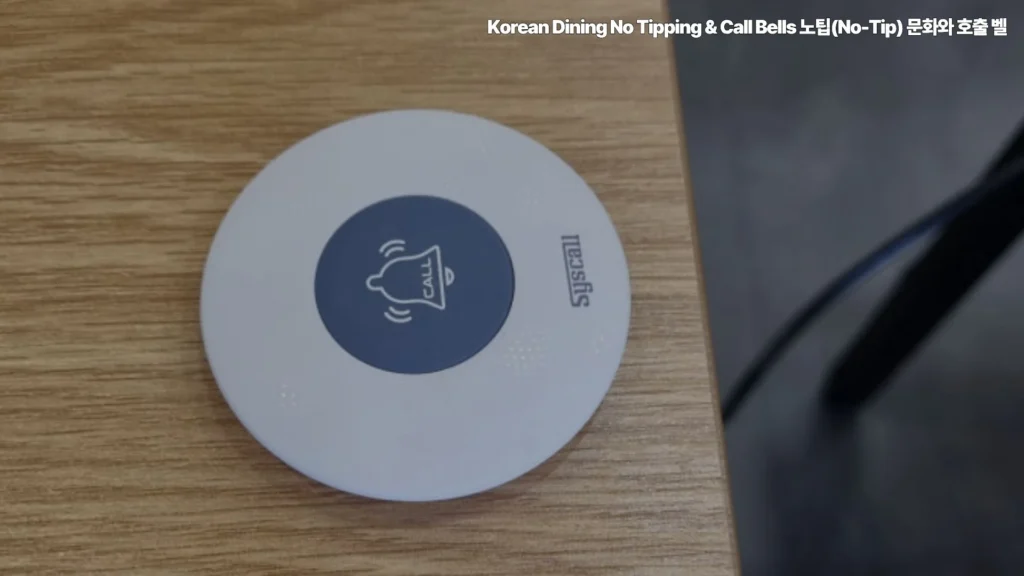
대부분의 식당 테이블 위, 혹은 가장자리의 측면에 작고 둥근 버튼이 부착되어 있습니다. 이 버튼을 누르면 “딩동~” 하는 명쾌한 소리가 식당 내부에 울려 퍼지고, 직원이 즉시 테이블로 다가옵니다. 주문을 할 때, 반찬을 추가로 요청할 때, 혹은 계산서가 필요할 때 언제든 주저하지 않고 이 벨을 누르면 됩니다.
You will find a small, round button attached to the top or the side edge of most restaurant tables. When you press this button, a clear “Ding-dong~” sound chimes throughout the restaurant, and a staff member will promptly approach your table. Whether you need to place an order, request side dish refills, or ask for the bill, you should press this bell without any hesitation.
호출 벨의 위치와 형태는 식당마다 다를 수 있습니다.
- 기본형 벨: 테이블 상판 모서리나 측면에 부착된 단순한 형태의 버튼입니다.
- 다기능 벨: 맥주(Beer), 소주(Soju), 호출(Call) 세 가지 버튼이 나뉘어 있는 벨입니다. 주류 소비가 많은 고깃집이나 술집에서 흔히 볼 수 있으며, 직원이 주문을 받으러 오는 단계를 생략하고 버튼을 누르는 즉시 해당 주류를 가져다주는 매우 효율적인 시스템입니다.
- 휴지통 부착형: 테이블 공간을 절약하기 위해 수저통이나 냅킨 통의 윗면에 벨이 통합되어 있는 경우도 많습니다.
The location and design of the call bell can vary by restaurant:
- Basic Bell: A simple button attached to the corner or the side edge of the tabletop.
- Multi-function Bell: A bell divided into three specific buttons: Beer (맥주), Soju (소주), and Call (호출). Commonly found in BBQ restaurants or pubs with high alcohol consumption, this highly efficient system skips the step of the waiter coming to take your order; pressing the specific drink button tells them exactly what to bring immediately.
- Integrated Bell: To save table space, the bell is often integrated into the top of the napkin holder or the utensil box.
3. 디지털로 진화하는 주문: 테이블 태블릿 (The Digital Evolution of Ordering: Table Tablets)
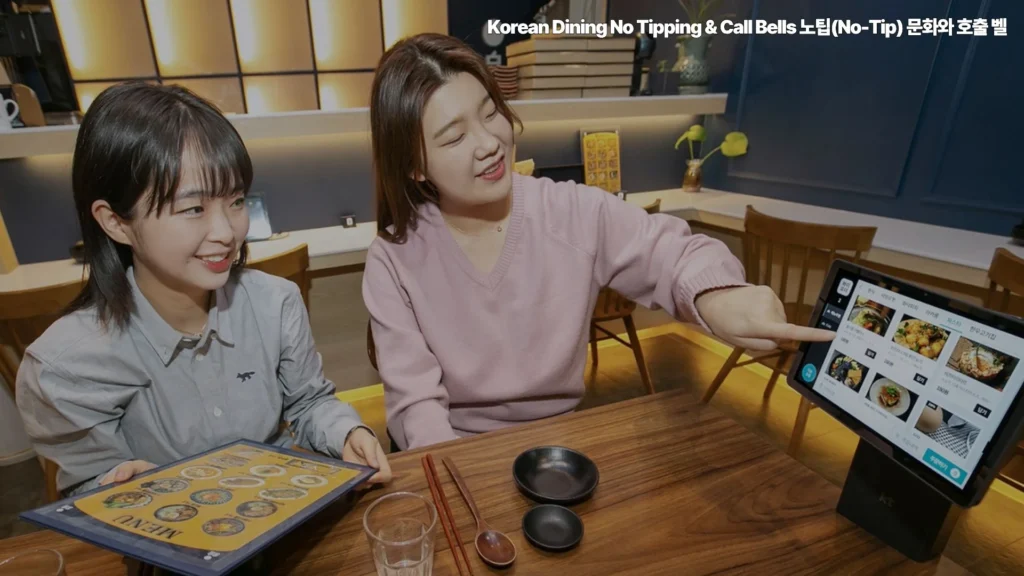
최근 몇 년 사이 한국의 식당들은 호출 벨을 넘어 더욱 진화된 형태인 ‘테이블 오더(Table Order)’ 시스템을 빠르게 도입하고 있습니다. 테이블마다 설치된 터치스크린 태블릿을 통해 고객이 직접 메뉴를 사진으로 확인하고 주문을 전송하는 방식입니다.
In recent years, Korean restaurants have been rapidly adopting an even more advanced system beyond the traditional call bell: the ‘Table Order’ system. This involves a touchscreen tablet mounted on each table, allowing customers to view photos of the menu items and transmit their orders directly to the kitchen.
이 태블릿 주문 시스템은 한국어를 전혀 하지 못하는 외국인 여행객들에게 최고의 편의를 제공합니다. 대부분의 기기가 화면 상단이나 우측 상단에 언어 변경 아이콘(지구본 모양 등)을 제공하며, 영어, 일본어, 중국어 등 다국어 지원 기능이 내장되어 있습니다.
This tablet ordering system provides the ultimate convenience for foreign travelers who do not speak any Korean. Most of these devices feature a language change icon (often shaped like a globe) at the top or top-right of the screen, offering built-in multilingual support in English, Japanese, Chinese, and more.
음식 사진, 상세한 설명, 가격이 명확하게 표시되어 있어 어떤 음식인지 추측할 필요가 없습니다. 또한, ‘직원 호출’ 메뉴가 태블릿 안에 소프트웨어 버튼으로 들어가 있는 경우가 많습니다. ‘물 좀 더 주세요’, ‘물티슈 주세요’, ‘앞치마 주세요’ 등 자주 필요한 요청 사항들이 이미 버튼 형태로 만들어져 있어, 말 한마디 없이 스크린 터치만으로 필요한 서비스를 정확하게 받을 수 있습니다.
With clear food photos, detailed descriptions, and exact prices displayed, there is no need to guess what you are ordering. Furthermore, the physical ‘Call Staff’ button is often integrated into the tablet’s software. Common requests such as “More water, please,” “Wet wipes, please,” or “Apron, please” are pre-programmed as specific buttons. You can receive precisely the service you need with a simple screen touch, without speaking a single word.
4. 계산은 어디서? 한국 식당의 결제 동선 (Where to Pay? The Checkout Flow in Korean Restaurants)
서구권의 많은 식당에서는 식사가 끝난 후 테이블에 앉아 영수증(Check)을 요청하고, 직원이 가져다준 영수증 홀더에 카드나 현금을 끼워두면 직원이 다시 결제를 진행하는 방식을 취합니다. 그러나 한국에서는 고급 파인다이닝(Fine Dining) 레스토랑을 제외한 95% 이상의 식당에서 결제 방식이 다릅니다.
In many Western restaurants, after finishing a meal, you remain seated, ask for the check, place your card or cash in the billfold brought by the server, and wait for them to process the payment and return. However, in Korea, excluding high-end fine dining establishments, the payment method in over 95% of restaurants operates differently.
식사를 마쳤다면 짐을 챙겨 일어나서 식당 출구 쪽에 위치한 ‘카운터(계산대)’로 직접 걸어가서 결제하는 것이 기본 규칙입니다.
테이블에 작은 계산서(종이 빌지)가 놓여 있다면 그것을 들고 카운터로 가면 됩니다. 만약 계산서가 없다면, 태블릿으로 주문했거나 포스(POS) 시스템에 테이블 번호가 기록된 것이므로 카운터로 가서 본인이 앉았던 테이블 번호나 위치를 가리키면 직원이 결제를 도와줍니다.
Once you have finished your meal, the standard rule is to gather your belongings, stand up, and walk directly to the ‘Counter’ (Cashier/Front Desk) located near the exit to pay.
If a small paper bill (Bilji) was left on your table, take it with you to the counter. If there is no paper bill, it means your order was recorded via the tablet or the main POS system. Simply go to the counter, point to the table where you were sitting or state your table number, and the staff will process your payment.
이 방식은 손님이 원할 때 즉각적으로 식당을 나설 수 있게 해주며, 불필요한 대기 시간을 줄여줍니다. 현금, 신용카드, 그리고 최근에는 카카오페이, 네이버페이, 애플페이(지원되는 곳에 한함) 등 다양한 비접촉식 모바일 결제도 널리 사용됩니다. 앞서 언급했듯이 이 과정에서 팁은 결코 추가되지 않습니다. 영수증에 찍힌 금액만 카드로 결제됩니다.
This method allows customers to leave the restaurant immediately whenever they wish, significantly reducing unnecessary waiting times. Cash, credit cards, and increasingly, various contactless mobile payments like Kakao Pay, Naver Pay, and Apple Pay (where supported) are widely accepted. As emphasized earlier, no tip is ever added during this process. Only the exact amount printed on the receipt will be charged to your card.
5. “물은 셀프입니다” – 셀프 서비스 문화의 이해 (“Water is Self-Service” – Understanding the Self-Serve Culture)
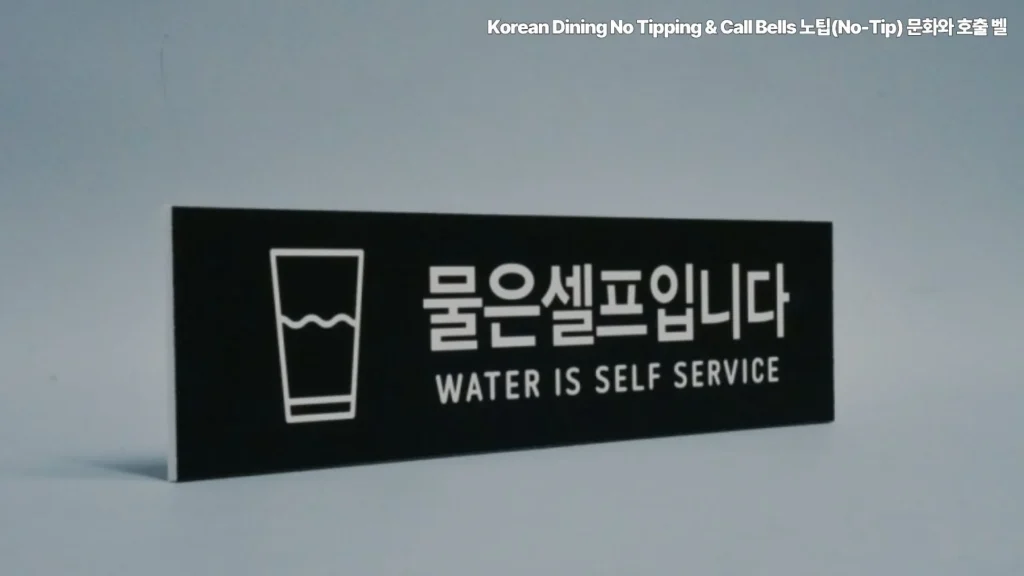
식당 내부에 “물은 셀프(Self)” 또는 “추가 반찬은 셀프”라는 안내문이 적혀 있는 것을 자주 보게 될 것입니다. 이는 노팁 문화, 그리고 인건비를 절약하여 합리적인 음식 가격을 유지하려는 식당 운영 방식과 밀접하게 연결되어 있습니다.
You will frequently notice signs inside restaurants that say “물은 셀프” (Water is Self) or “추가 반찬은 셀프” (Additional side dishes are Self). This is closely connected to the no-tipping culture and the restaurant’s operational strategy to save on labor costs in order to maintain reasonable food prices.
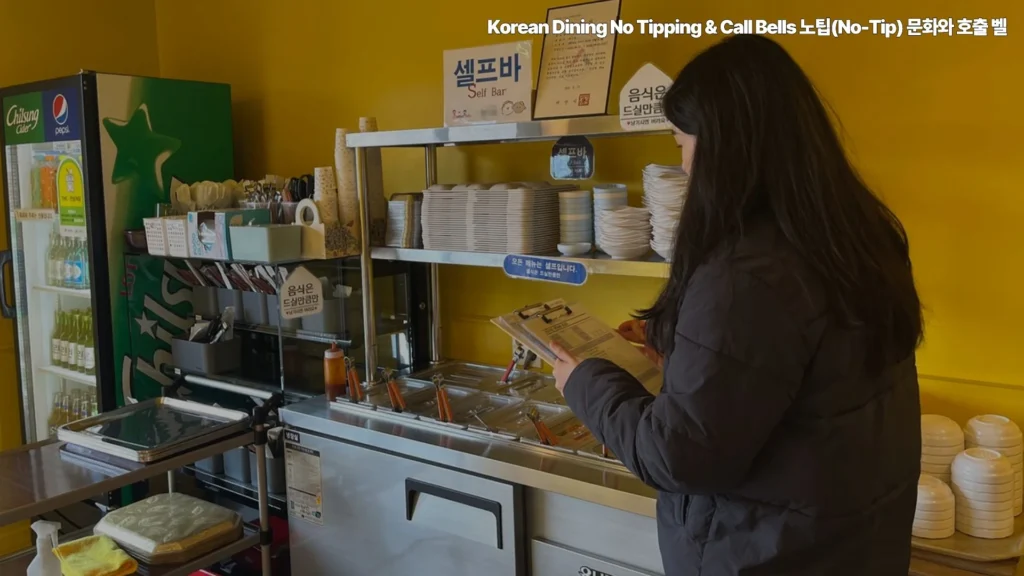
첫 물병과 물컵은 직원이 가져다주지만, 그 이후에 물이 더 필요하면 식당 한구석에 마련된 정수기에서 직접 물을 떠다 마셔야 하는 곳이 많습니다. 또한, 김치나 단무지 등 한국 식당의 자랑인 넉넉한 ‘밑반찬(Side dishes)’ 역시 처음에는 기본으로 제공되지만, 다 먹은 뒤 더 먹고 싶을 때는 매장 중앙에 위치한 ‘셀프 바(Self-bar)’에 가서 비치된 접시에 본인이 먹을 만큼만 직접 담아오는 방식이 보편화되어 있습니다.
While the staff usually brings the first bottle of water and cups, if you need more water later, many places require you to fetch it yourself from a water dispenser (정수기) located in a corner of the dining area. Additionally, while the generous ‘Banchan’ (side dishes like Kimchi and pickled radishes)—a point of pride in Korean dining—are initially served to you, if you want refills, it is widespread practice to go to a designated ‘Self-bar’ in the middle of the restaurant and serve yourself onto small plates, taking only what you can eat.
이러한 셀프 서비스는 결코 직원이 불친절해서가 아닙니다. 팁 비용이 없고 음식 가격이 저렴한 대신, 기본적인 수고로움을 고객이 일부 분담하는 합리적인 시스템입니다. 남기지 않을 만큼만 반찬을 가져오는 것은 환경을 보호하는 중요한 식사 예절이기도 합니다.
This self-service does not imply that the staff is unfriendly or negligent. Instead, it is a practical system where the customer shares a bit of the effort in exchange for the absence of tip charges and affordable food prices. Taking only the amount of side dishes you can actually finish is also considered an important dining etiquette to protect the environment and avoid food waste.
6. 요약하자면 (In Summary)
한국에서의 외식은 계산대에서 팁 비율을 고민할 필요가 없고, 서버와 눈을 맞추기 위해 긴장할 필요가 없는 매우 직관적이고 편안한 경험입니다. 식탁 위의 호출 벨을 자신 있게 누르고, 맛있는 음식을 즐긴 후, 카운터로 향해 정확한 금액만 지불하세요. 그리고 미소와 함께 전하는 “감사합니다” 한마디면 당신은 이미 완벽하게 한국의 식사 문화를 마스터한 것입니다.
Dining out in South Korea is a highly intuitive and relaxing experience where you never have to mentally calculate tipping percentages at the register or anxiously try to catch a server’s eye. Press the call bell on the table with confidence, enjoy your delicious meal, head to the front counter to pay the exact listed amount, and leave with a smile and a simple “감사합니다” (Thank you). Do this, and you have already perfectly mastered Korean dining culture.
👉 [[Travel Guide] 한국 여행 필수 앱: 네이버 지도 영어 설정 및 사용법 가이드 (How to Use Naver Map for Korea Travel)]
👉 [[Travel Guide] KTX & Intercity Bus Booking Guide for K-Drama Fans (KTX & 버스 예약 가이드)]
👉 [[Travel Guide] Papago vs Google Translate: Why Papago is the Ultimate Survival Tool in Korea & How to Master Image Translation]
👉 [[Travel Guide] 대한민국 구석구석]
👉 [[Survival Korean] Ep.13 Shopping & Fashion – 50 Essential Phrases for K-Drama Fans (쇼핑/패션 생존 한국어: 드라마 주인공처럼 트렌디하게 쇼핑하는 필수 문장 50가지)]
👉 [[Survival Korean] Ep.14 Payment & Tax Refund – 50 Essential Phrases for K-Drama Fans (결제/환급 생존 한국어: 드라마 주인공처럼 스마트하게 결제하고 면세 환급받는 필수 문장 50가지)]
👉 [[Survival Korean] Ep.15 Luggage Delivery & Storage – 50 Essential Phrases for K-Drama Fans (짐 배송/보관 생존 한국어: 드라마 주인공처럼 두 손 가볍게 여행하는 필수 문장 50가지)]
👉 [[Filming Locations] 이 사랑 통역 되나요? 촬영지 지도: 서울 서순라길부터 속초부산까지 국내 촬영]
👉 [[Filming Locations] 사이코지만 괜찮아 촬영지 지도: 고성 시크릿블루부터 원주 사니다카페까지]
👉 [[Filming Locations] 최우식 x 김다미의 초여름! ‘그 해 우리는’ 촬영지 지도: 최웅 작업실부터 연수네까지(Our Beloved Summer Filming Locations Map)]
👉 [[Filming Locations] 이상한 매력의 그녀! ‘이상한 변호사 우영우’ 촬영지 지도: 수원 김밥집부터 소덕동 팽나무까지 (Extraordinary Attorney Woo Filming Locations Map)]