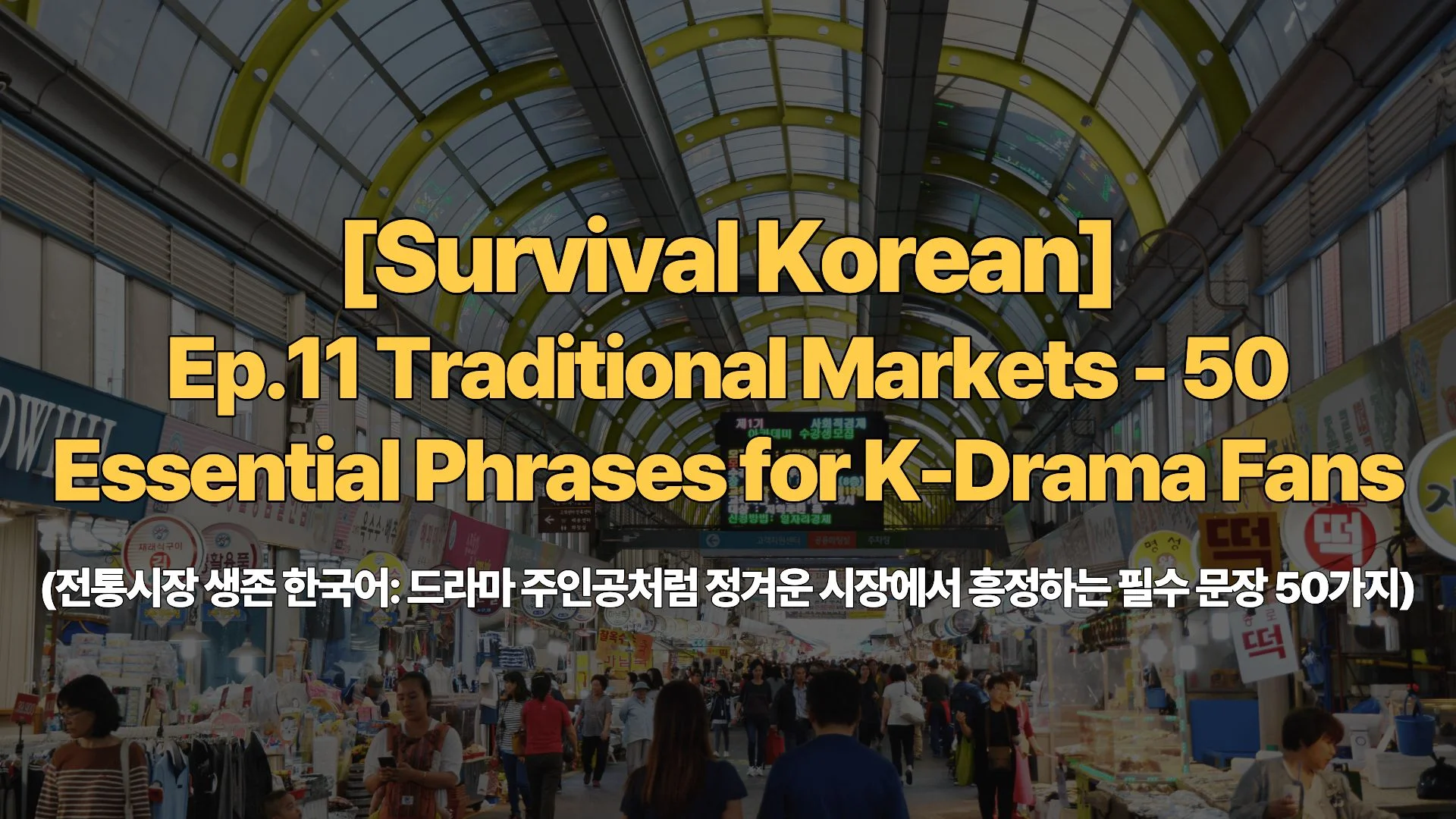
“Taste authentic street food and feel the warmth of locals just like in a K-drama.”
“한국 드라마 속 주인공처럼 진정한 길거리 음식을 맛보고 현지인들의 따뜻한 정을 느껴보세요.”
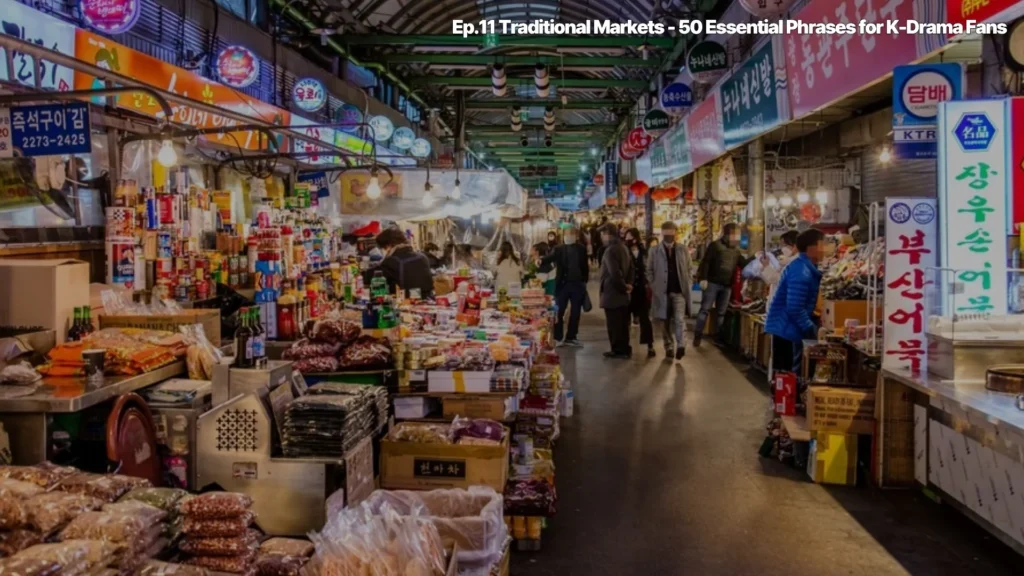
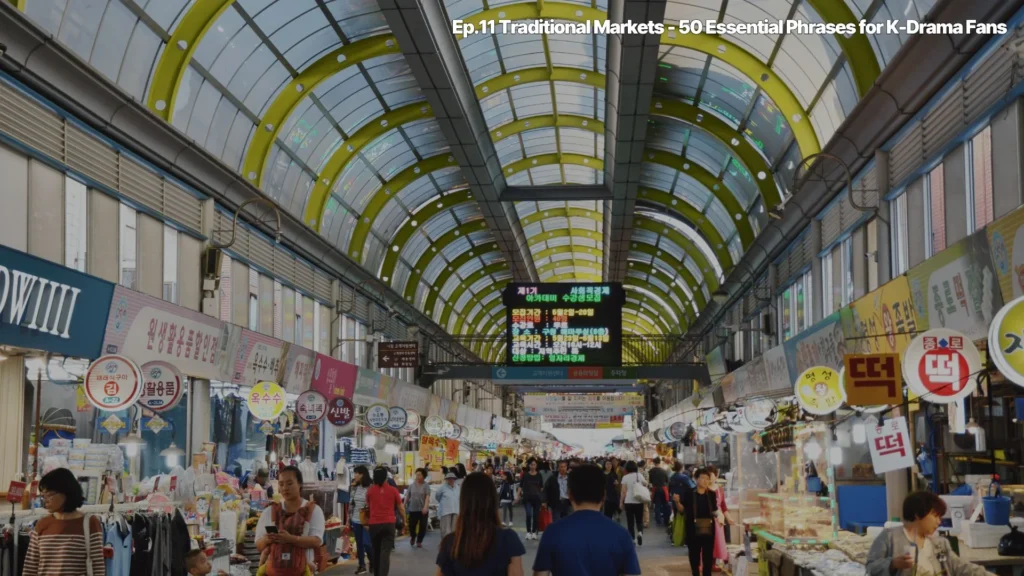
Traditional markets (전통시장) are the heart of Korean culture. Many dramas feature scenes of characters eating tteokbokki at a food stall, buying fresh ingredients, or bargaining with friendly vendors.
Navigating these bustling markets can be overwhelming without knowing how to ask for prices, order food, or ask for a small discount. To help you enjoy Korea’s vibrant traditional markets confidently, we have prepared 50 essential phrases for exploring, eating, and shopping.
전통시장(옛날부터 물건을 사고팔던 오래된 시장)은 한국 문화의 중심입니다. 많은 드라마에는 등장인물들이 포장마차에서 떡볶이를 먹거나, 신선한 재료를 사고, 친절한 상인들과 흥정하는(물건값을 깎기 위해 대화하는) 장면이 나옵니다.
가격을 묻고, 음식을 주문하거나 약간의 할인을 요구하는 방법을 모른다면 북적이는 시장을 구경하는 것이 막막할 수 있습니다. 한국의 활기찬 전통시장을 자신 있게 즐길 수 있도록 구경하고, 먹고, 쇼핑하기 위한 50가지 필수 문장을 정리했습니다.
1. Greetings & Looking Around (인사 및 둘러보기)
- Hello! → 안녕하세요! (An-nyeong-ha-se-yo!)
- I am just looking around. → 그냥 구경하는(물건을 사지 않고 살펴보는) 중이에요. (Geu-nyang gu-gyeong-ha-neun jung-i-e-yo.)
- What is this? → 이건 뭐예요? (I-geon mwo-ye-yo?)
- Can I touch it? → 만져봐도(손으로 대봐도) 되나요? (Man-jyeo-bwa-do doe-na-yo?)
- Can I taste it? → 맛봐도(조금 먹어봐도) 되나요? (Mat-bwa-do doe-na-yo?)
- When does the market close? → 시장은 몇 시에 문 닫아요? (Si-jang-eun myeoch si-e mun dad-a-yo?)
- Are you open every day? → 매일 여나요? (Mae-il yeo-na-yo?)
- It looks delicious. → 맛있어 보여요. (Ma-siss-eo bo-yeo-yo.)
- Where do they sell clothes? → 옷은 어디서 파나요? (Os-eun eo-di-seo pa-na-yo?)
- I will come back later. → 이따가(조금 뒤에 나중에) 다시 올게요. (I-tta-ga da-si ol-ge-yo.)
2. Asking for Prices & Buying (가격 묻기 및 구매하기)
- How much is this? → 이거 얼마예요? (I-geo eol-ma-ye-yo?)
- How much for one? → 한 개에 얼마예요? (Han gae-e eol-ma-ye-yo?)
- I’ll take this. → 이걸로(이 물건으로) 할게요. (I-geol-ro hal-ge-yo.)
- Give me two, please. → 두 개 주세요. (Du gae ju-se-yo.)
- Please give me 10,000 Won worth. → 10,000원어치(만 원의 가격만큼) 주세요. (Man-won-eo-chi ju-se-yo.)
- Do you have a smaller size? → 더 작은 사이즈 있나요? (Deo jak-eun sa-i-jeu iss-na-yo?)
- Do you have other colors? → 다른 색깔 있나요? (Da-reun saek-kkal iss-na-yo?)
- Please wrap it up. → 포장해(물건을 싸서 담아) 주세요. (Po-jang-hae ju-se-yo.)
- Please put it in a bag. → 봉투(물건을 담는 비닐이나 종이)에 담아주세요. (Bong-tu-e dam-a-ju-se-yo.)
- I don’t need a bag. → 봉투는 괜찮아요. (Bong-tu-neun gwaen-chan-a-yo.)
3. Ordering Street Food (길거리 음식 주문하기)
- Please give me one portion of Tteokbokki. → 떡볶이(매콤한 양념에 떡을 끓인 음식) 1인분 주세요. (Tteok-bok-ki il-in-bun ju-se-yo.)
- Can I get some soup? → 국물(음식의 물 부분) 좀 주시겠어요? (Gung-mul jom ju-si-gess-eo-yo?)
- Please give me 5 skewers of fish cake. → 어묵(생선 살을 뭉쳐 만든 음식) 5개 주세요. (Eo-muk da-seot gae ju-se-yo.)
- Is it very spicy? → 많이 매워요? (Man-i mae-wo-yo?)
- Please make it not spicy. → 안 맵게 해주세요. (An maep-ge hae-ju-se-yo.)
- Is there cilantro in it? → 고수(독특한 향이 나는 채소) 들어가나요? (Go-su deu-reo-ga-na-yo?)
- I am allergic to peanuts. → 땅콩(견과류의 한 종류) 알레르기가 있어요. (Ttang-kong al-re-reu-gi-ga iss-eo-yo.)
- Can we eat here? → 여기서 먹고(음식을 삼키고) 가도 되나요? (Yeo-gi-seo meok-go ga-do doe-na-yo?)
- Please give me some tissue. → 휴지(더러운 것을 닦는 얇은 종이) 좀 주세요. (Hyu-ji jom ju-se-yo.)
- It’s really delicious! → 정말 맛있어요! (Jeong-mal ma-siss-eo-yo!)
4. Bargaining & Paying (흥정 및 결제하기)
- It’s a bit expensive. → 조금 비싸요(물건값이 높아요). (Jo-geum bi-ssa-yo.)
- Can you give me a discount? → 조금만 깎아주세요(가격을 내려주세요). (Jo-geum-man kkak-a-ju-se-yo.)
- Please give me some extra. → 덤(물건을 살 때 조금 더 얹어 주는 것) 좀 더 주세요. (Deom jom deo ju-se-yo.)
- Can I pay with a card? → 카드 결제(신용카드로 돈을 내는 것) 되나요? (Ka-deu gye-je doe-na-yo?)
- Do you accept cash? → 현금(지폐나 동전) 받으시나요? (Hyeon-geum ba-deu-si-na-yo?)
- Let me transfer the money. → 계좌 이체(은행 계좌로 돈을 보내는 것) 할게요. (Gye-jwa i-che hal-ge-yo.)
- Can I use the Onnuri Gift Certificate? → 온누리 상품권(전통시장에서 쓰는 돈 모양의 표) 쓸 수 있나요? (On-nu-ri sang-pum-gwon sseul su iss-na-yo?)
- Give me my change, please. → 거스름돈(남아서 돌려받는 돈) 주세요. (Geo-seu-reum-don ju-se-yo.)
- The calculation is wrong. → 계산(돈을 세는 것)이 잘못된 것 같아요. (Gye-san-i jal-mot-doen geot gat-a-yo.)
- Thank you! → 감사합니다! (Gam-sa-hap-ni-da!)
5. Finding Ways & Facilities (길 찾기 및 시설 이용)
- Where is the restroom? → 화장실(대소변을 보는 곳) 어디 있어요? (Hwa-jang-sil eo-di iss-eo-yo?)
- Where is the ATM? → 현금 인출기(돈을 뽑는 기계)가 어디 있나요? (Hyeon-geum in-chul-gi-ga eo-di iss-na-yo?)
- How do I get to the subway station? → 지하철역(기차가 서는 곳)으로 가려면 어떻게 가요? (Ji-ha-cheol-yeok-eu-ro ga-ryeo-myeon eo-tteoh-ge ga-yo?)
- Where is the exit? → 출구(밖으로 나가는 문)가 어디예요? (Chul-gu-ga eo-di-ye-yo?)
- Can I leave my bags somewhere? → 짐(들고 다니는 물건) 보관하는 곳이 있나요? (Jim bo-gwan-ha-neun gos-i iss-na-yo?)
- Where is the parking lot? → 주차장(차를 세워두는 곳)이 어디인가요? (Ju-cha-jang-i eo-di-in-ga-yo?)
- Where is the customer service center? → 고객 센터(불편한 점을 도와주는 곳)가 어디에 있어요? (Go-gaek sen-teo-ga eo-di-e iss-eo-yo?)
- I lost my wallet. → 지갑(돈을 넣는 작은 가방)을 잃어버렸어요. (Ji-gap-eul ilh-eo-beo-ryeoss-eo-yo.)
- It is too crowded. → 사람이 너무 많아요. (Sa-ram-i neo-mu man-a-yo.)
- Goodbye! → 안녕히 계세요! (An-nyeong-hi gye-se-yo!)
6. Survival Korean Data Table (Essential Market Types)
| Name | Address / Search | Description |
|---|---|---|
| Gwangjang Market (광장시장) | Search “광장시장” in Naver Map | Famous for Bindaetteok (mung bean pancakes) and Yukhoe (beef tartare). A must-visit in Seoul. |
| Mangwon Market (망원시장) | Search “망원시장” in Naver Map | Trendy market loved by locals for affordable snacks like croquettes and fried chicken. |
| Namdaemun Market (남대문시장) | Search “남대문시장” in Naver Map | The largest traditional market in Korea, offering clothes, food, and souvenirs. |
| Noryangjin Fish Market (노량진 수산시장) | Search “노량진수산시장” in Naver Map | The best place to buy fresh seafood and eat it right away at the restaurants upstairs. |
💡 Tip for K-Drama Fans: In Korean traditional markets, the concept of “덤” (Deom) is very special. It refers to extra items given for free by the vendor out of warmth and friendliness. Also, while many stores accept cards, bringing cash (Korean Won) is highly recommended for street food stalls! (한국 전통시장에서는 ‘덤’이라는 특별한 문화가 있습니다. 상인이 정과 친절함의 표시로 공짜로 조금 더 얹어주는 것을 말합니다. 또한 카드를 받는 곳이 많아졌지만, 길거리 노점상을 위해 현금을 챙겨가는 것을 강력히 추천합니다!)
7. 연관 질문 (FAQ) & 공식 링크 (Official Links)
Q1. Can I bargain in traditional markets? (전통시장에서 흥정할 수 있나요?)
A1. Yes, bargaining is somewhat acceptable in traditional markets, especially when buying clothes or multiple items, but always ask politely! (네, 옷을 사거나 물건을 여러 개 살 때 전통시장에서 어느 정도 흥정이 가능하지만, 항상 정중하게 부탁해야 합니다!)
Q2. Do I need cash? (현금이 필요한가요?)
A2. Yes, while many places accept credit cards, smaller stalls and street food vendors often prefer or only accept cash. (네, 많은 곳이 신용카드를 받지만, 작은 노점상이나 길거리 음식점은 현금을 선호하거나 현금만 받는 경우가 많습니다.)
Official Links (공식 링크):
8. 함께 보면 더 재미있는 글 (Related Posts)
👉 [[Travel Guide] 한국 여행 필수 앱: 네이버 지도 영어 설정 및 사용법 가이드 (How to Use Naver Map for Korea Travel)]
👉 [[Travel Guide] KTX & Intercity Bus Booking Guide for K-Drama Fans (KTX & 버스 예약 가이드)]
👉 [[Survival Korean] Ep.8 Asking for Photos – 50 Essential Phrases for K-Drama Fans (사진 부탁 생존 한국어: 드라마 촬영지에서 인생 사진을 남기는 필수 문장 50가지)]
👉 [[Survival Korean] Ep.9 Restaurants & K-BBQ – 50 Essential Phrases for K-Drama Fans (식당/고기집 생존 한국어: 드라마 속 고기 구워 먹는 씬 완벽 재현 필수 문장 50가지)]
👉 [[Survival Korean] Ep.10 Cafes – 50 Essential Phrases for K-Drama Fans (카페 생존 한국어: 드라마 주인공처럼 여유롭게 커피를 주문하는 필수 문장 50가지)]
👉 [[Filming Locations] 이 사랑 통역 되나요? 촬영지 지도: 서울 서순라길부터 속초부산까지 국내 촬영]
👉 [[Filming Locations] 사이코지만 괜찮아 촬영지 지도: 고성 시크릿블루부터 원주 사니다카페까지]
👉 [[Filming Locations] 최우식 x 김다미의 초여름! ‘그 해 우리는’ 촬영지 지도: 최웅 작업실부터 연수네까지(Our Beloved Summer Filming Locations Map)]
👉 [[Filming Locations] 이상한 매력의 그녀! ‘이상한 변호사 우영우’ 촬영지 지도: 수원 김밥집부터 소덕동 팽나무까지 (Extraordinary Attorney Woo Filming Locations Map)]
관련된 글:
 [Survival Korean] Ep.4 Local Buses – 50 Essential Phrases for K-Drama Fans (지방 버스 생존 한국어: 드라마 속 시골 촬영지까지 정복하는 필수 문장 50가지)
 [Survival Korean] Ep.8 Asking for Photos – 50 Essential Phrases for K-Drama Fans (사진 부탁 생존 한국어: 드라마 촬영지에서 인생 사진을 남기는 필수 문장 50가지)
 [Survival Korean] Ep.9 Restaurants & K-BBQ – 50 Essential Phrases for K-Drama Fans (식당/고기집 생존 한국어: 드라마 속 고기 구워 먹는 씬 완벽 재현 필수 문장 50가지)
 [Survival Korean] Ep.10 Cafes – 50 Essential Phrases for K-Drama Fans (카페 생존 한국어: 드라마 주인공처럼 여유롭게 커피를 주문하는 필수 문장 50가지)