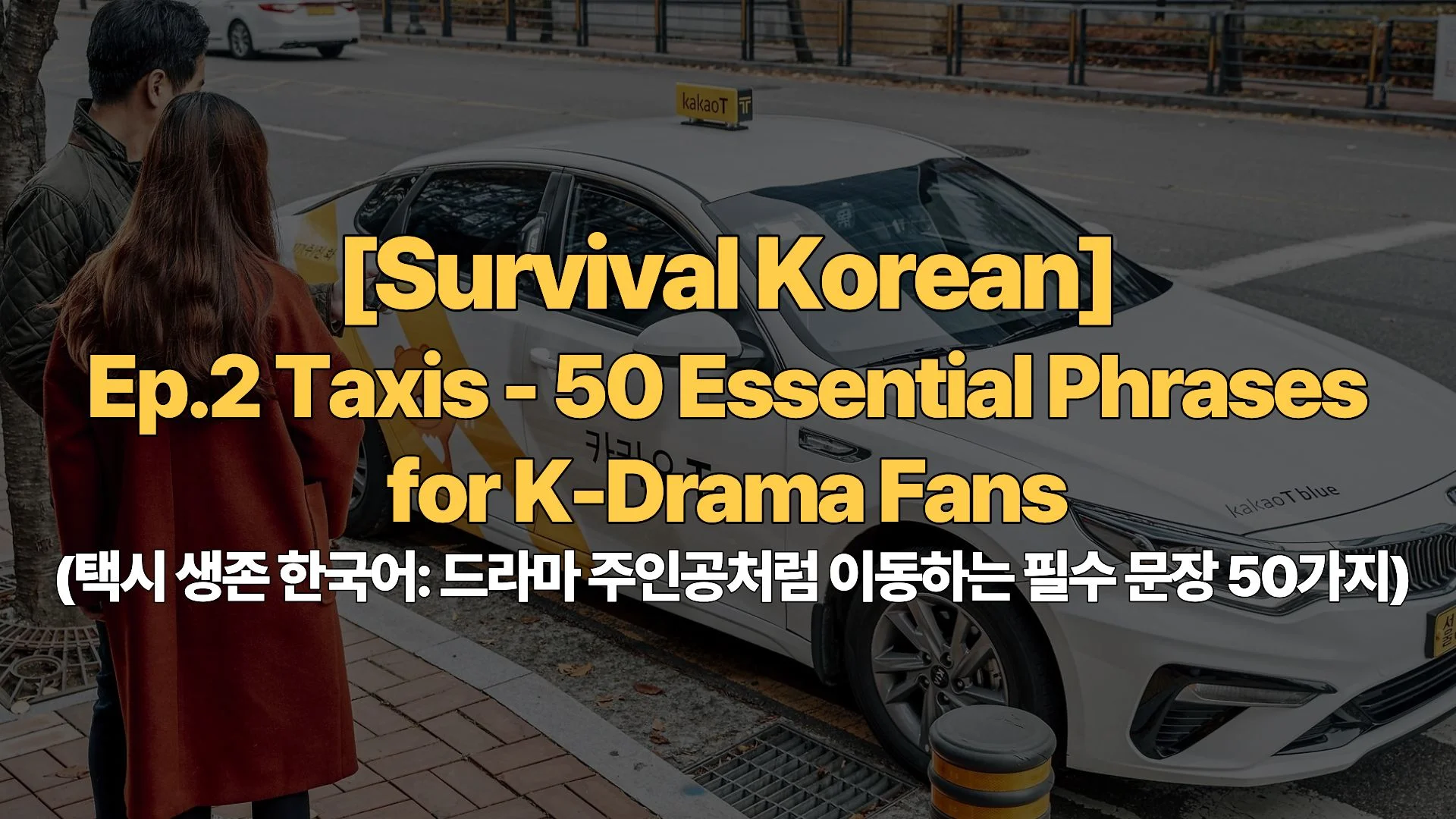
“Move like a K-drama lead, from your hotel to the filming site.”
“드라마 속 주인공처럼, 숙소에서 촬영지까지 완벽하게 이동하세요.”
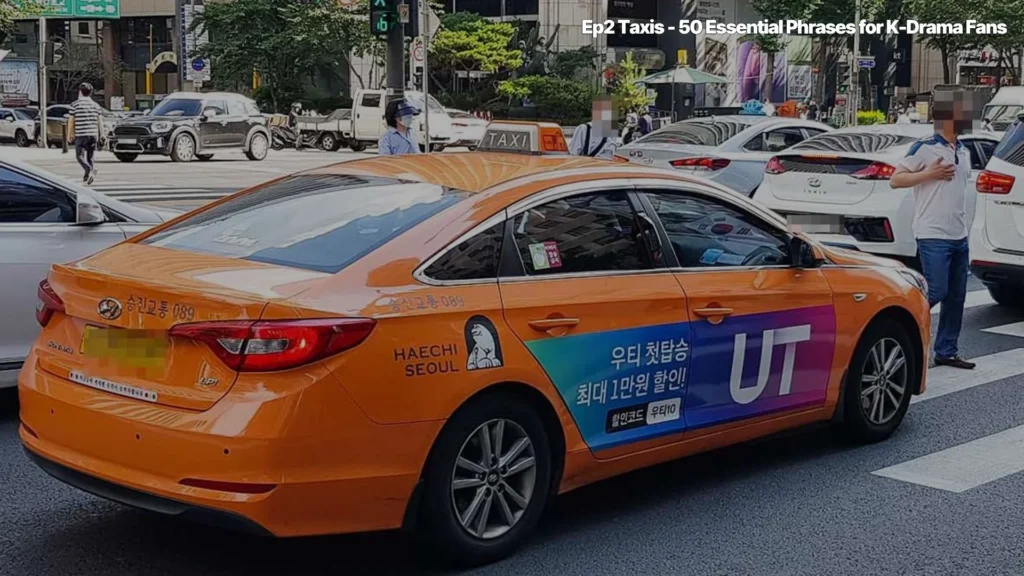
Taxis in Korea are affordable, clean, and safe. For K-drama fans, they are often the best way to reach those hidden filming locations that are tucked away in quiet neighborhoods or up steep hills. To help you communicate smoothly with the driver, we have prepared 50 essential taxi-related phrases.
한국의 택시는 저렴하고 깨끗하며 안전합니다. 특히 대중교통으로 가기 힘든 골목길이나 높은 언덕 위의 드라마 촬영지를 찾아갈 때 택시는 최고의 선택입니다. 기사님과 오해 없이 소통하고 원하는 목적지에 정확히 내릴 수 있도록 50가지 실전 문장을 정리했습니다.
1. Hailing & Starting the Trip (택시 잡기 및 탑승)
- Hello. → 안녕하세요. (An-nyeong-ha-se-yo.)
- Taxi! (Calling out) → 택시! (Taek-si!)
- Are you available? → 빈차인가요? (Bin-cha-in-ga-yo?)
- Please go to this address. → 이 주소로 가주세요. (I ju-so-ro ga-ju-se-yo.)
- Can you go to [Seoul Station]? → [서울역] 가시나요? (Se-ul-yeok ga-si-na-yo?)
- Please put my bags in the trunk. → 트렁크에 짐 좀 실어주세요. (Teu-reong-keu-e jim jom sil-eo-ju-se-yo.)
- Can I open the trunk? → 트렁크 좀 열어주실 수 있나요? (Teu-reong-keu jom yeol-eo-ju-sil su iss-na-yo?)
- Is it okay for 4 people to ride? → 네 명 타도 되나요? (Ne myeong ta-do doe-na-yo?)
- I reserved a taxi through an app. → 앱으로 예약했어요. (Aep-eu-ro ye-yak-haess-eo-yo.)
- Are you the driver for [Name]? → [이름] 예약한 사람 맞나요? (I-reum ye-yak-han sa-ram manj-na-yo?)
2. Navigating to Destination (목적지 소통 및 경로)
- Please follow the GPS. → 네비게이션대로 가주세요. (Ne-bi-ge-i-syeon-dae-ro ga-ju-se-yo.)
- Please go as fast as possible. → 최대한 빨리 가주세요. (Choe-dae-han ppal-ri ga-ju-se-yo.)
- There is no rush, please go safely. → 안 급해요, 천천히 안전하게 가주세요. (An geup-hae-yo, cheon-cheon-hi an-jeon-ha-ge ga-ju-se-yo.)
- How long does it take? → 얼마나 걸려요? (Eo-mna-na geol-ryeo-yo?)
- Is there a lot of traffic? → 길이 많이 막히나요? (Gil-i ma-ni mak-hi-na-yo?)
- Is this the right way? → 이 길 맞나요? (I gil manj-na-yo?)
- Please go straight. → 직진해 주세요. (Jik-jin-hae ju-se-yo.)
- Please turn right here. → 여기서 우회전해 주세요. (Yeo-gi-seo u-hoe-jeon-hae ju-se-yo.)
- Please turn left at the light. → 신호등에서 좌회전해 주세요. (Sin-ho-deung-e-seo jwa-hoe-jeon-hae ju-se-yo.)
- Please take the highway. → 고속도로로 가주세요. (Go-sok-do-ro-ro ga-ju-se-yo.)
3. Adjusting the Ride Environment (차내 환경 조절)
- It’s hot, please turn on the AC. → 더워요, 에어컨 좀 켜주세요. (Deo-wo-yo, e-eo-keon jom kyeo-ju-se-yo.)
- It’s cold, please turn down the AC. → 추워요, 에어컨 좀 줄여주세요. (Chu-wo-yo, e-eo-keon jom jul-yeo-ju-se-yo.)
- Please turn on the heater. → 히터 좀 켜주세요. (Hi-teo jom kyeo-ju-se-yo.)
- Can I open the window? → 창문 좀 열어도 될까요? (Chang-mun jom yeol-eo-do doel-kka-yo?)
- Please turn down the radio. → 라디오 소리 좀 줄여주세요. (Ra-di-o so-ri jom jul-yeo-ju-se-yo.)
- I have motion sickness. → 제가 멀미를 좀 해요. (Je-ga meol-mi-reul jom hae-yo.)
- Can I charge my phone? → 핸드폰 충전 좀 할 수 있을까요? (Haen-deu-pon chung-jeon jom hal su iss-eul-kka-yo?)
4. Arrival & Dropping Off (도착 및 하차)
- Please stop here. → 여기서 세워주세요. (Yeo-gi-seo se-wo-ju-se-yo.)
- Stop in front of that building. → 저 건물 앞에서 세워주세요. (Jeo geon-mul ap-e-seo se-wo-ju-se-yo.)
- Please stop at the entrance. → 입구에서 세워주세요. (Ip-gu-e-seo se-wo-ju-se-yo.)
- Drop me off over there. → 저기서 내려주시면 돼요. (Jeo-gi-seo nae-ryeo-ju-si-myeon dwae-yo.)
- Please go into the alley. → 골목 안으로 들어가 주세요. (Gol-mok an-eu-ro deu-reo-ga ju-se-yo.)
- You can stop here. → 여기 그냥 세워주셔도 돼요. (Yeo-gi geu-nyang se-wo-ju-syeo-do dwae-yo.)
- Wait a moment, please. → 잠시만 기다려 주세요. (Jam-si-man gi-da-ryeo ju-se-yo.)
- I’ll be right back. → 금방 올게요. (Geum-bang ol-ge-yo.)
- Stop near the subway station. → 지하철역 근처에 세워주세요. (Ji-ha-cheol-yeok geun-cheo-e se-wo-ju-se-yo.)
5. Payment & Fare (결제 및 요금)
- How much is it? → 얼마예요? (Eo-mna-ye-yo?)
- Can I pay by card? → 카드로 계산해도 되나요? (Ka-deu-ro gye-san-hae-do doe-na-yo?)
- Do you accept T-money? → 티머니 카드 돼요? (Ti-meo-ni ka-deu dwae-yo?)
- I’ll pay with cash. → 현금으로 낼게요. (Hyeon-geum-eu-ro nael-ge-yo.)
- Please give me a receipt. → 영수증 주세요. (Yeong-su-jeung ju-se-yo.)
- Keep the change. → 잔돈은 가지세요. (Jan-don-eun ga-ji-se-yo.)
- Is there an extra charge? → 추가 요금 있나요? (Chu-ga yo-geum iss-na-yo?)
- Why is it so expensive? → 요금이 왜 이렇게 많이 나왔나요? (Yo-geum-i wae i-reoh-ge ma-ni na-wann-na-yo?)
- I think you took the long way. → 길을 돌아오신 것 같아요. (Gil-eul dol-a-o-sin geot gat-a-yo.)
- Is the toll included? → 통행료 포함인가요? (Tong-haeng-ryo po-ham-in-ga-yo?)
- Thank you. → 감사합니다. (Gam-sa-hap-ni-da.)
- Have a nice day. → 좋은 하루 되세요. (Jo-eun ha-ru doe-se-yo.)
- Drive safely. → 안전 운전 하세요. (An-jeon un-jeon ha-se-yo.)
- I’ll give you 5 stars. → 별 5개 드릴게요. (Byeol das-eot-gae deu-ril-ge-yo.)
6. Survival Korean Data Table (Essential Locations)
| Name | Address | Description |
|---|---|---|
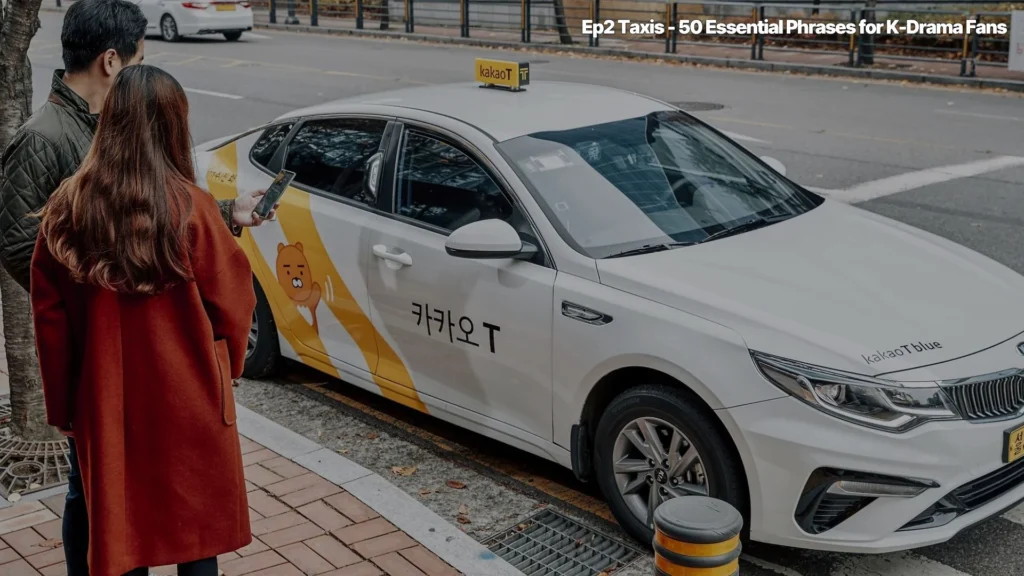
| Kakao Taxi App | Google Play / App Store | Most popular taxi app in Korea. |
| International Taxi Desk | Incheon Airport T1/T2 1F | English service for foreigners. |
| Seoul Station Taxi Stand | Seoul Station Exit 1 | Taxi stand near the AREX exit. |
| Myeongdong Taxi Stand | Myeongdong Station Exit 8 | Busy taxi spot in the shopping district. |
💡 Tip for K-Drama Fans: Google Maps is not ideal for walking directions in Korea. We recommend downloading Naver Map. You can copy the Korean addresses from our list above and paste them directly into Naver Map for the most accurate routes! (한국에서는 구글 맵보다 네이버 지도가 정확합니다. 위 리스트의 한글 주소를 복사해 네이버 지도에 붙여넣어 보세요!)
7. 연관 질문 (FAQ) & 공식 링크 (Official Links)
Q1. 한국 택시는 밤에 할증 요금이 붙나요?
A1. Yes, a surcharge (20-40%) applies from 10 PM to 4 AM. (네, 밤 10시부터 새벽 4시 사이에는 할증 요금이 붙습니다.)
Q2. 앱 없이 택시를 잡으려면 어떻게 하나요?
A2. Look for a taxi with a red ‘빈차’ (Vacant) sign and wave your hand. (빨간색 ‘빈차’ 표시가 켜진 택시를 보고 손을 흔드세요.)
Official Links (공식 링크):
8. 함께 보면 더 재미있는 글 (Related Posts)
👉 [[Travel Guide] 네이버 지도 영어 설정 및 사용법 가이드 (How to Use Naver Map for Korea Travel)]
👉 [[Travel Guide] KTX & Intercity Bus Booking Guide for K-Drama Fans (KTX & 버스 예약 가이드)]
👉 [[Filming Locations] 최우식 x 김다미의 초여름! ‘그 해 우리는’ 촬영지 지도: 최웅 작업실부터 연수네까지]
👉 [[Filming Locations] 선재 업고 튀어 촬영지 지도: 수원 행궁동 몽테드부터 아야진해수욕장까지]
👉 [[Filming Locations] 사이코지만 괜찮아 촬영지 지도: 고성 시크릿블루부터 원주 사니다카페까지]
👉[[Filming Locations] 킹더랜드 촬영지 지도: 남산타워부터 태국 아룬 사원까지 (King the Land Filming Locations Map)]
관련된 글:
 [Survival Korean] Ep.1 Airport & Internet – 50 Essential Phrases for K-Drama Fans (공항 & 인터넷 생존 한국어: 50가지 필수 문장 완벽 정리)
 WOWPASS vs T-money: Best Card for Korea Travel? (와우패스 vs 티머니 비교 가이드)
 Korea SIM Card vs. eSIM vs. Pocket WiFi: Best Internet for K-Drama Pilgrimages (한국 여행 유심 vs eSIM vs 포켓 와이파이 완벽 비교)
 Top 5 Convenience Store Survival Tips for Late-Night K-Drama Tours (심야 촬영지 투어를 위한 한국 편의점 활용 꿀팁 TOP 5)