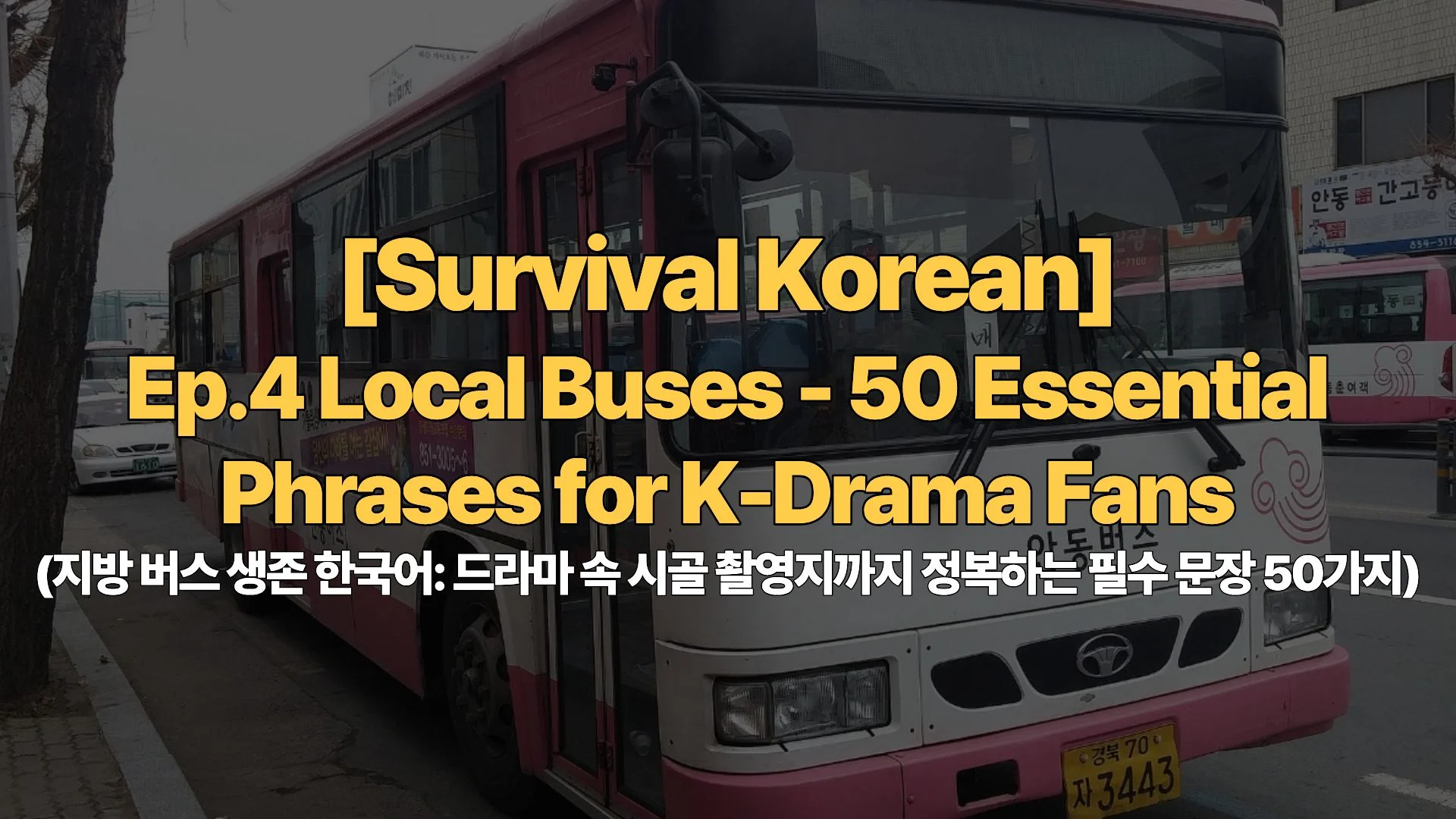
“Adventure beyond Seoul and reach the hidden filming sites of your favorite dramas.”
“서울을 넘어, 당신이 사랑하는 드라마 속 숨겨진 촬영지까지 찾아가 보세요.”
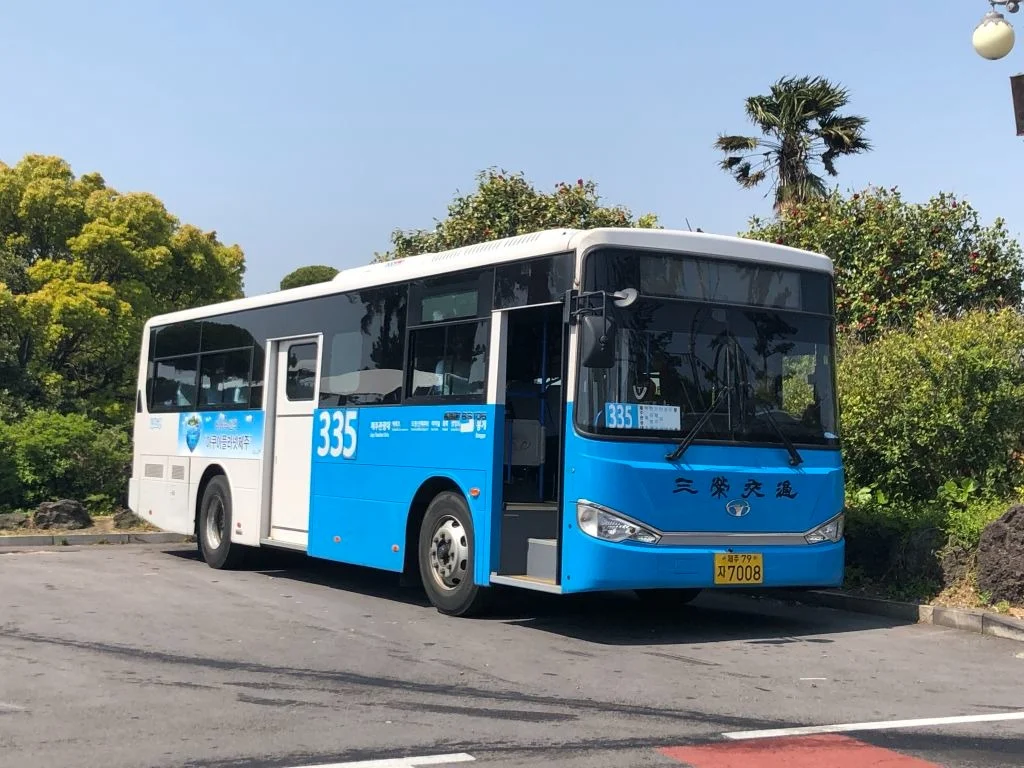
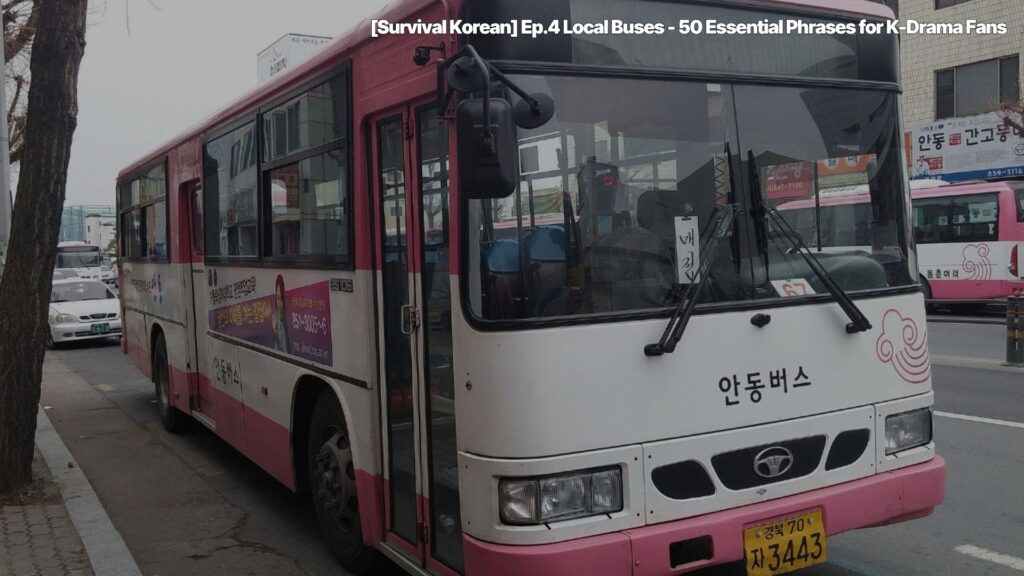
While the subway is great for Seoul, many iconic K-drama filming sites—like the seaside villages in Hometown Cha-Cha-Cha or the quiet streets in Our Beloved Summer—require taking a local bus (지방 버스). Navigating these buses can be tricky as they often lack English announcements. To help you reach your destination safely and confidently, we have prepared 50 essential local bus-related phrases.
서울은 지하철이 편리하지만, 갯마을 차차차의 바닷가 마을이나 그 해 우리는의 고즈넉한 거리 같은 촬영지들은 지방 버스를 타야만 갈 수 있는 경우가 많습니다. 영어 안내방송이 부족한 지방 버스에서도 당황하지 않고 목적지에 도착할 수 있도록 50가지 실전 문장을 정리했습니다.
1. At the Bus Stop & Checking Routes (버스 정류장에서 노선 확인)
- Where is the bus stop? → 버스 정류장이 어디예요? (Beo-seu jeong-ryu-jang-i eo-di-ye-yo?)
- Which bus goes to [Location]? → [장소] 가려면 몇 번 타야 해요? (Jang-so ga-ryeo-myeon myeoch beon ta-ya hae-yo?)
- Does this bus go to the filming site? → 이 버스 촬영지 가나요? (I beo-seu chwal-yeong-ji ga-na-yo?)
- Is this the right place to go to [City]? → 여기서 [도시] 가는 거 맞아요? (Yeo-gi-seo do-si ga-neun geo manj-na-yo?)
- How often does the bus come? → 버스가 얼마나 자주 와요? (Beo-seu-ga eo-mna-na ja-ju wa-yo?)
- When is the next bus? → 다음 버스 언제 와요? (Da-um beo-seu eon-je wa-yo?)
- Is this the last bus for today? → 이게 오늘 마지막 버스인가요? (I-ge o-neul ma-ji-mak beo-seu-in-ga-yo?)
- Where is the bus timetable? → 버스 시간표가 어디에 있어요? (Beo-seu si-gan-pyo-ga eo-di-e iss-eo-yo?)
- How many stops until [Destination]? → [목적지]까지 몇 정거장 남았어요? (Mok-jeok-ji-kka-ji myeoch jeong-ge-jang nam-ass-eo-yo?)
- Is there a bus to the train station? → 기차역 가는 버스 있나요? (Gi-cha-yeok ga-neun beo-seu iss-na-yo?)
2. Boarding & Paying the Fare (버스 탑승 및 요금 결제)
- Do I get on through the front door? → 앞문으로 타나요? (Ap-mun-eu-ro ta-na-yo?)
- Can I pay with a T-money card? → 티머니 카드 돼요? (Ti-meo-ni ka-deu dwae-yo?)
- Can I pay with cash? → 현금으로 내도 되나요? (Hyeon-geum-eu-ro nae-do doe-na-yo?)
- How much is the fare? → 요금이 얼마예요? (Yo-geum-i eo-mna-ye-yo?)
- One person, please. → 한 명이요. (Han myeong-i-yo.)
- Two people, please. → 두 명이요. (Du myeong-i-yo.)
- I don’t have small change. → 잔돈이 없어요. (Jan-don-i eops-eo-yo.)
- Do I need to tag my card when getting off? → 내릴 때 카드 찍어야 해요? (Nae-ril ttae ka-deu jjik-eo-ya hae-yo?)
- The card reader is not working. → 카드 단말기가 안 돼요. (Ka-deu dan-mal-gi-ga an dwae-yo.)
- Is the transfer discount applied? → 환승 할인 되나요? (Hwan-seung hal-in doe-na-yo?)
3. Communication with the Driver (기사님과 소통하기)
- Please tell me when we reach [Location]. → [장소] 도착하면 좀 알려주세요. (Jang-so do-chak-ha-myeon jom al-ryeo-ju-se-yo.)
- Does this bus stop at the Hanok Village? → 이 버스 한옥마을 정류장에 서나요? (I beo-seu han-ok-ma-ul jeong-ryu-jang-e seo-na-yo?)
- Is this bus going the right way? → 이 버스 제대로 가는 거 맞나요? (I beo-seu je-dae-ro ga-neun geo manj-na-yo?)
- How long does it take to get there? → 거기까지 얼마나 걸려요? (Geo-gi-kka-ji eo-mna-na geol-ryeo-yo?)
- Is this bus an express bus? → 이거 직행 버스인가요? (I-geo jik-haeng beo-seu-in-ga-yo?)
- I missed my stop! → 정류장을 지나쳤어요! (Jeong-ryu-jang-eul ji-na-chyeoss-eo-yo!)
- Can I put my luggage in the storage? → 짐칸에 짐 실어도 돼요? (Jim-kan-e jim sil-eo-do doe-na-yo?)
- Wait a moment, please! → 잠시만요! (Jam-si-man-yo!)
- Thank you. → 감사합니다. (Gam-sa-hap-ni-da.)
- Have a good day. → 수고하세요. (Su-go-ha-se-yo.)
4. Inside the Bus & Environment (버스 내부 상황)
- Is this seat taken? → 여기 빈 자리인가요? (Yeo-gi bin ja-ri-in-ga-yo?)
- Can I sit here? → 여기 앉아도 될까요? (Yeo-gi anj-a-do doel-kka-yo?)
- It’s a bit hot, can you turn on the AC? → 조금 더워요, 에어컨 좀 켜주세요. (Jo-geum deo-wo-yo, e-eo-keon jom kyeo-ju-se-yo.)
- It’s cold, can you turn down the AC? → 조금 추워요, 에어컨 좀 줄여주세요. (Jo-geum chu-wo-yo, e-eo-keon jom jul-yeo-ju-se-yo.)
- Please turn up the volume of announcements. → 안내방송 소리 좀 키워주세요. (An-nae-bang-song so-ri jom ki-wo-ju-se-yo.)
- Excuse me, I’m getting off. → 저 내릴게요. (Jeo nae-ril-ge-yo.)
- Can you open the back door? → 뒷문 좀 열어주세요. (Dwin-mun jom yeol-eo-ju-se-yo.)
- Is it okay to stand? → 서서 가도 되나요? (Seo-seo ga-do doe-na-yo?)
- Is there a USB charger? → USB 충전기 있나요? (USB chung-jeon-gi iss-na-yo?)
- Is there free WiFi? → 무료 와이파이 되나요? (Mu-ryo wa-i-pa-i doe-na-yo?)
5. Getting Off & Directions (하차 및 길 찾기)
- Where should I press the bell? → 벨 어디서 눌러요? (Bel eo-di-seo nul-reo-yo?)
- I’ll get off at the next stop. → 다음 정류장에서 내릴게요. (Da-um jeong-ryu-jang-e-seo nae-ril-ge-yo.)
- Is the filming site nearby? → 촬영지가 여기서 가깝나요? (Chwal-yeong-ji-ga yeo-gi-seo ga-kkap-na-yo?)
- Which way should I walk? → 어느 방향으로 걸어가야 해요? (Ee-neu bang-hyang-eu-ro geol-reo-ga-ya hae-yo?)
- How long does it take by foot? → 걸어서 얼마나 걸려요? (Geol-reo-seo eo-mna-na geol-ryeo-yo?)
- Is there a landmark nearby? → 근처에 큰 건물이 있나요? (Geun-cheo-e keun geon-mul-i iss-na-yo?)
- Where is the bus stop for the return trip? → 돌아가는 버스 정류장은 어디예요? (Dol-a-ga-neun beo-seu jeong-ryu-jang-eun eo-di-ye-yo?)
- When is the last bus back? → 돌아가는 막차는 몇 시예요? (Dol-a-ga-neun mak-cha-neun myeoch si-ye-yo?)
- Can I take a taxi from here? → 여기서 택시 탈 수 있나요? (Yeo-gi-seo taek-si tal su iss-na-yo?)
- Thank you for your help. → 도와주셔서 감사합니다. (Do-wa-ju-syeo-seo gam-sa-hap-ni-da.)
6. Survival Korean Data Table (Essential Locations)
| Name | Address | Description |
|---|---|---|
| Joam Terminal (Hwaseong) | 3-3, Joamnam-ro, Ujeong-eup, Hwaseong-si | Bus terminal used for reach filming sites in Gyeonggi-do. |
| Suwon Hwaseong Bus Stop | 1-10, Maehyang-dong, Paldal-gu, Suwon-si | Main stop for visiting Our Beloved Summer sites. |
| Jeonju Hanok Village Stop | 1-1, Pungnamdong 1-ga, Wansan-gu, Jeonju | Central hub for local buses in Jeonju filming areas. |
| Intercity Bus Terminal | Search “Bus Terminal” in Naver Map | Hubs to move between different provinces. |
💡 Tip for K-Drama Fans: Google Maps is not ideal for walking directions in Korea. We recommend downloading Naver Map. You can copy the Korean addresses from our list above and paste them directly into Naver Map for the most accurate routes! (한국에서는 구글 맵보다 네이버 지도가 정확합니다. 위 리스트의 한글 주소를 복사해 네이버 지도에 붙여넣어 보세요!)
7. 연관 질문 (FAQ) & 공식 링크 (Official Links)
Q1. 지방 버스에서도 티머니 카드를 쓸 수 있나요?
A1. Yes, T-money is accepted in almost all cities and counties across Korea. (네, 한국 대부분의 도시와 군 단위 지역에서 티머니 카드를 사용할 수 있습니다.)
Q2. 버스 벨을 미리 눌러야 하나요?
A2. Yes, press the “Stop” (정지) bell before your stop, or the driver might pass it if no one is waiting there. (네, 내릴 정류장 전에 벨을 꼭 누르세요. 그렇지 않으면 기사님이 그냥 지나칠 수 있습니다.)
Official Links (공식 링크):
8. 함께 보면 더 재미있는 글 (Related Posts)
👉 [[Travel Guide] 네이버 지도 영어 설정 및 사용법 가이드 (How to Use Naver Map for Korea Travel)]
👉 [[Travel Guide] KTX & Intercity Bus Booking Guide for K-Drama Fans (KTX & 버스 예약 가이드)]
👉 [[Filming Locations] 최우식 x 김다미의 초여름! ‘그 해 우리는’ 촬영지 지도: 최웅 작업실부터 연수네까지]
👉 [[Filming Locations] 선재 업고 튀어 촬영지 지도: 수원 행궁동 몽테드부터 아야진해수욕장까지]
👉 [[Filming Locations] 사이코지만 괜찮아 촬영지 지도: 고성 시크릿블루부터 원주 사니다카페까지]
👉[[Filming Locations] 이 사랑 통역 되나요? 촬영지 지도: 서울 서순라길부터 속초·부산까지 국내 촬영지 (Can This Love Be Translated Filming Locations)]
관련된 글:
 [Survival Korean] Ep.1 Airport & Internet – 50 Essential Phrases for K-Drama Fans (공항 & 인터넷 생존 한국어: 50가지 필수 문장 완벽 정리)
 [Survival Korean] Ep.2 Taxis – 50 Essential Phrases for K-Drama Fans (택시 생존 한국어: 드라마 주인공처럼 이동하는 필수 문장 50가지)
 [Survival Korean] Ep.3 Subway – 50 Essential Phrases for K-Drama Fans (지하철 생존 한국어: 길 잃지 않고 촬영지까지 가는 필수 문장 50가지)
 How to Travel Hands-Free to Korea’s Rural Filming Sites: ZimCarry & Locker Guide (짐 없이 가볍게! 한국 지방 촬영지 여행을 위한 짐캐리 & 물품보관함 완벽 가이드)